

Do You Have Rotting Soffits or Fascia?
One of the most common home repair calls we get in the Cincinnati area are for soffit and fascia damage. Soffits and fascia are parts of the home that are particularly susceptible to water, storm and animal damage. Unfortunately, however, soffit and fascia construction defects abound in Cincinnati-area homes and therefore you need to be on guard to spot trouble before expensive soffit rot drains your bank account.
Watch Video on Soffit and Fascia Rot Explanation
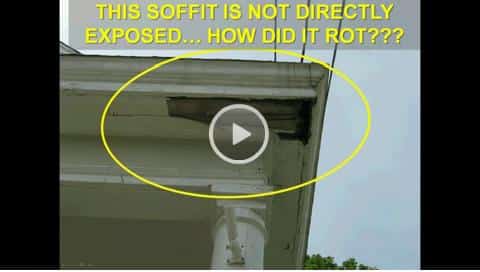
How to Stop Damage to Soffits and Fascia
In this article and accompanying video, I will share with you how your soffits and fascia become rotted and ruined and what you can do to mitigate costly repairs resulting from their demise. Specifically, I will illustrate (using my high-tech white board!) how the roof, gutter, soffit and fascia work together to shed water from the house. Then I’ll indicate how a defect or breakdown in this system allows water to enter the fascia and soffit area to cause a rash of water damage and wood rot. Finally, I’ll share a few simple steps you can take to reduce your chances of experiencing costly fascia and soffit repair on your home.
How are Soffits and Fascia Damaged?
Soffit Rot in Cincinnati
First, a quick story. When I entered the home repair industry, I would look up toward the roof line of a home and notice that the soffits (sometimes called “eves” in other parts of the country) would appear damaged or worn. The paint would appear worn, bubbling or peeling and the wood would sometime be rotting. Ironically, the surrounding wood and paint on the fascia, trim and siding appeared fine. The soffit, being on the underside of the roofline, is generally sheltered from direct rain, ice and wind… so I thought, “Why would this area be damaged when surrounding areas are not?” My experience seems rather counter-intuitive, doesn’t it?
It wasn’t until I learned a little more about how the roof, gutter, soffit and fascia are supposed to work together that I uncovered the answer to my question. In the video associated with this article, I diagram how water gets in behind the soffit and damages the wood from the backside. The vertical surface of the soffit then traps moisture, allowing water to pool. Hence, wood rot and paint damage happen much faster as a result of the moist environment.
Fascia and Soffits Don’t Like Water
You really need to watch the video, as I’m much better at explaining things in person than in writing. But the overall concept of how water gets behind your fascia and soffit is fairly simple. Water flows down the shingles, reaches the end of the roof and needs somewhere to go. Ideally, the water falls off the shingle into a properly sloped gutter, into a downspout, out a drain and away from the house. However, some water will adhere to the underside of the shingle and drip down onto the fascia board.

Don Kennedy explains fascia and soffit rot
This is why a part called “drip edge” is critical to the process of protecting the fascia and soffit from water. Drip edge, does just what its name implies. It is a piece, usually made of aluminum, that runs parallel to the gutter and edge of the shingles to direct water away from the fascia and soffit and into the gutter. Think of drip edge as you would a crossing guard in front of a school. The children, then represent the wayward drops of water, wanting to run all over the place. The crossing guard makes sure that the kids stay in the crosswalk and protected from oncoming traffic. Drip edge, then, serves as the “crossing guard,” making sure water drops into the gutters and not allowed to soak the fascia or get into the soffit area.
Water Damage to Fascia and Soffits
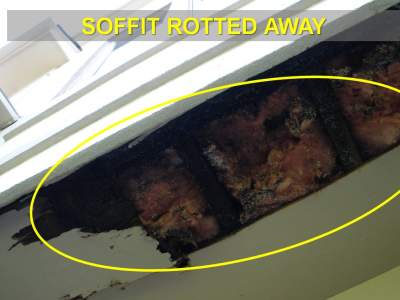
Soffit Rotted Away
If the drip edge is broken or missing, damage to fascia and soffits can occur. Water coming off the roof will travel back up the shingle and soak the fascia board. Over time, the fascia board becomes rotted, undermining and of the fasteners that are sunk into that piece of wood. Given that the gutter is usually attached to the fascia board, during a heavy rain, the weight of the water in that gutter will cause either the gutter itself, or the entire gutter and fascia assembly to pull away from the home. In this case, homeowners might conclude that simply reattaching the gutter is all that is needed, when a much more comprehensive repair is required.
Once the fascia board rots or pulls away from the home, it opens up a perfect pathway for water to travel into the soffit area. As water pools inside the soffit, it completely rots and ruins that wood. Unfortunately however, unless a homeowner spot the water dripping out of a soffit vent, they won’t see any symptom until serious damage has occurred—that symptom being peeling paint or rotted wood. In such cases, no simple repair will do. Rather, the wood must be torn out and replaced.
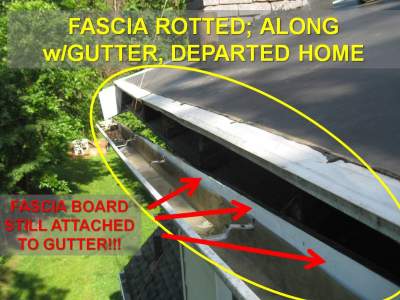
Fascia and Gutter Pulling Away
Water entering the soffit region of the roof can also cause additional damage. If the leak is substantial enough, water can travel past the soffit into the exterior wall of the home and damage drywall, insulation, sheathing and framing. Moisture inside the wall not only causes expensive damage, but invites termites and carpenter ants to feed on the moist wood—perpetuating the problem. Repairing water damage from this scenario is invasive and expensive—yet often preventable.
Fascia and Soffit Warning Signs
Although your home may contain defects in how shingles, drip edge and gutters are installed, it may not be cost effective for you to inspect, remove and re-install these components correctly. Consequently, I’d recommend you keep an eye out for two things to alert you early on to a problem with your fascia.
- Look for abnormality between the gutter and fascia: Discoloration peeling paint, dampness or deterioration in the fascia board can be resolved and repaired before damage to the soffit or wood rot occurs. (See accompanying picture)
- Look for stains or black streaks coming down the face of the gutter: This might be an indication of your gutters overflowing. Resolving this early before water backs up and flows into the fascia and soffits can save costly repairs in the future. (See accompanying picture)
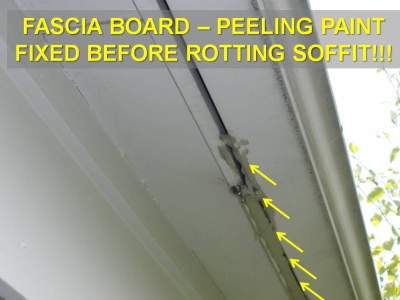
Keep and eye out for fascia problems
Click here or more information on soffit repair in Cincinnati, OH.
Preventative Maintenance to Avoid Fascia and Soffit Repairs
- Keep those gutters clean! Often overlooked during a gutter cleaning are the qualities that keep the gutters flowing. Check the slope of all gutters along with cleaning the downspouts and drains. Gutter guards aren’t a fail-safe! Periodic inspection and cleaning is still needed if you have gutter guards installed.
- Keep wood fascia and soffits caulked and painted. If any water does come in contact with the wood, it will be protected from wood rot if the gaps are caulked and the paint is in good condition.
- Keep the animals & insects away! Birds, wasps, raccoons, squirrels and other critters seem to love this region of your home to make it theirs. Unfortunately, their presence is usually destructive to fascia and soffits so remove them as soon as they move in.
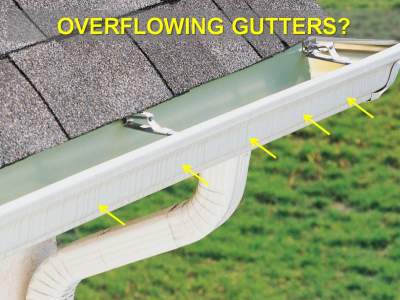
Gutters Are Key to Preventing Soffit and Fascia Damage



Wow! I learned a lot from your posts masterlist!…I'm now eager to view your blog because I know I will learn a lot!
Great video
Hello, Don,
Thank you so much for the very informative video.
I have a question regarding the fascia on a roof remodel. The builder extended the rafter tails to create an 18" wide soffit. At one exterior corner, the fascia has a 2" gap where the side of one fascia board meets the side of another fascia board. Ice shield was installed over the fascia, and drip edge was installed over that, with the shingles on top. The builder says the gap will not cause any problems. Do you think he is wrong?
Also, there is about a 1/2 inch gap between the roof sheating and the fascia. The ice shield covers that gap. When snow was melting off the roof I did not see any water dripping between the fascia and the drip edge. All of the water seemed to be dripping off the drip edge into the gutter. Do you think this gap might cause problems in the future?
Thank you so much for answering my question. You have no idea how much I appreciate and respect your input.
Teresa, thank you for the kind words and I'm glad the video was helpful for you.
Your explanation is very thorough but it is still a bit difficult to picture and address this digitally, but hopefully I can help. From what I can gather, any gap like this could be a problem down the road. I can't quite understand why the builder would do this and my hope is that there was some reason besides oversight or poor planning. Ideally there will never be a gap in the fascia because as soon as water gets inside there, it can cause rot or mold or other defects that can really damage a home. Can you see these gaps or do you know they exist and were patched over? Because especially if they are still visible, if you can see it then water can get to it and likely will over time. For the 1/2 inch gap I might even worry about small animals getting in there and causing problems also. If there are layers over the gaps and they are sealed well then hopefully that is sufficient and you can avoid putting more money into this.
Again, this is the best that I can understand and hopefully there is no serious problem moving forward. Sorry to not have a definitive answer but I hope that is some help. You can call Steve and talk more about this to clear things up and feel free to ask for me directly if you want as well (513)724-0539.
Great explanation, thank you for the education!
Agree with John this is a great article with lots of details. Thank you!!
great info. i have a house that is a few years old. had screened porch added on back. get water dripping where porch is connected to house along the seam. have added seam tape along top and caulk but not fix. any ideas?
Aaron,
Sounds like a common problem. Is the water coming into the home? When you say the seam along the house… is this at the roof line?
Don
Thanks so much!
The crucial role of the drip edge was news to me. Thanks fo this great video, fom a Michigander.
This video was perfect to help me figure out my soffit leak problem.
Question: How far should the shingles extend and what size drip edge is adaquite for 4 inch fascia? It appears the water is rolling behind the drip edge and that the shingles do not come out far enough.
dk-
This is a highly contentious issue depending on who you ask or which source your reference. For example, GAF (a shingle manufacturer) recommends a minimum of 3/8″ of extension beyond the drip edge while other manufacturers call for overhangs in excess of 1 inch! In the Asphalt Roofing Manufacturers Association’s Residential Asphalt Roofing Manual, overhangs of 1/4″ to 3/4 are generally called for. But the type of roof design, underlayment, decking, drip edge, shingles and local building codes can always cause variation in these guidelines.
I’ve probably confused you more than answered your question!
Here’s the bottom line: one of the biggest problems we see isn’t so much whether the overhang of the shingle beyond the drip edge is a few tenths of an inch out of whack. The problem is generally that there never was drip edge installed, or the components of that roof and fascia were installed so poorly, or the components have been damaged by ice, debris, or time.
When you say that the water is rolling behind the drip edge… do you mean at the top or the bottom?
Thanks for the great question.
Don
Hey thanks for sharing! My question is regarding adding fiberglass insulation to existing. Should I leave a gap or air space above the soffit and vents or can I cover them with insulation?
Thank you.
Azmi-
If I understand your question correctly, you are concerned about the air flow from the soffit vent up through the attic and then out a ridge or gable vent, correct? If so, then yes, you are correct. You need to make sure to not block those vents in the soffit with insulation. An easy way to prevent blockage of these much needed pathways for air is to buy some plastic vent guards that can be stapled to the underside of the roof decking. This prevents insulation–whether in batts or blown-in from stifling the soffit vent. Make sense?
Thanks for your question!
Don
Thank you for such a good video. Unfortunately, I am writing this note after discovering that my entire back porch roof (9’x28′) which also covers an interior 1/2 bath (9’x9) suffers from all the problems you mention. As well as the “halfway” and in retrospect foolish remedies (mere reattachment of the gutter/not replacement of the rotted fascia) thatt were tried by the prior owner’s repair person. Now we are left with a tale of: rotted soffit, spongy rotted sheathing, detattached gutters, rot in many rafter tails, rotted siding where water has coursed back the soffit and then down the interior of the wall via “wiring channels and plumbing vent channels”, etc. What a mess! Anyone reading this, PLEASE have a pro look at any problem you have and take on the recommended course of both correctioon and preventative maintenance so that you don’t foist a hosst of problems on future owners like myself.
Brad-
I am so sorry to hear of your experience. We’re working on a new video as we speak (should be released in a week or two) that shows some of the worst rot and termite damage on a home I’ve ever personally seen up close. In this case, it was due to years of water intrusion and neglected maintenance … so your advice to take action with a qualified professional at the first sign of trouble is good advice. Thank you for your kind feedback on our videos… I am glad you found it helpful.
Take care,
Don
I have a contractor that started to install fascia and soffets today and I think that I have a big problem. they are installing the vinyl fascia right over the rotted wood and did not replace the rotten wood first. I believe the wood will and can still continue to rot, mold to follow etc…. am I right? I clearly asked and though that I verified the rotted wood would be replaced. I just need an expert to verify for me that not replacing the rotten wood can and likely will create issues down the road. I have to apologize that I have not reviewed your videos yet, I’m sure that I will learn alot from them. Kris
Kristine-
Yes, the rotten wood needs to be replaced, else the new materials will have nothing solid to fasten themselves to. Please call us right away at 513-724-0539 and we can discuss getting one of our craftsmen to your home to inspect the soffits.
Take care,
Don
I have an issue where my gutters back up and overflow behind the gutter itself and drips between the gutter and the house… I thought it was the gutters not being angled properly. Needless to say I now have mold in my wall because the water backed up under the shingles and runs into the exterior wall. Great article, I wish I knew about this earlier on, homeowners won’t cover the damage to the wall or the roof, and I don’t have the money to fix it all. So now my 65k 4 bdrm dream home is going to the bank when I file bankruptcy. Gotta love it.
Eric,
I’m sorry this happened to you. Are you able to do any of the work yourself?
Don
I live in Florida. Walls are stucco. Water is running fron behind soffit to walls. I handyman came cover the corner of the roof and shingles with a waterproof kind of sheet. He told me that the singles are newrr, but the water still running. What do you think it is? Shingles? Gutters?
Rita,
Sorry to hear you’re having that issue. Your question is a good one, but there is really no way of knowing what the problem is without seeing it. I would recommend contacting your local Better Business Bureau to find a trusted home repair professional who can come and take a look.
Best of luck in finding a solution!
Take Care,
Jacob
Great video and explanation! Even though it’s likely been more than 13 years since you made this video, it’s still so informative! Thank you from Vancouver, BC Canada!
My gutters are partially detached.
In the one place I climbed up a ladder to look, the fascia appears to be rotten.
After watching your video I’m thinking that most of my fascia might be rotten. My house is 95 years old with a wooden exterior that has been covered with vinyl siding. The vinyl siding hides signs of rotting, so it is difficult to tell the condition from the ground. If I need to replace the gutters and fascia is there any reason I would need to keep the vinyl siding on the fascia and soffits? It seems like painted wood would be easier to keep an eye on.
Hi Geneva,
If you want a more permanent fix, we’d actually recommend replacing that rotting fascia with a PVC material. That way you wouldn’t have to worry about the wood rotting and even keeping an eye on it! It’s a bit more expensive – but it will likely save you headaches and money in the long run.