

Window Leak Repair
Watch Video on Window Leaks
Here at ProMaster Home Repair & Handyman of Cincinnati, we’ve helped many homeowners solve a difficult window leak. These leaks often result from improperly installed windows or poor home construction techniques that prompt the need for repair. The following article reveals the warning signs that every homeowner can use to determine if they have a serious window leak.
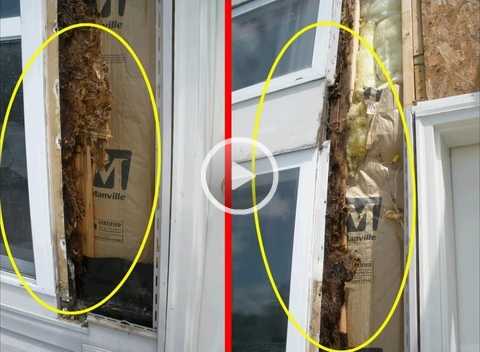
Tell Tale Signs of a Window Leak
Visible moisture on the interior of your home on or around a window is a rather obvious sign of a window leak, but there are often more insidious window leaks with symptoms far more difficult to spot. Unfortunately, these symptoms arise only after significant damage has occurred. The following pictures and description will help you spot those problems before they can cost your thousands of dollars in preventable home repairs.
Do These Window Leak Symptoms Look Familiar?
If any of these pictures look familiar, don’t panic. A good home repair professional can isolate and eliminate the source of the leak and repair the resulting water damage.
But time is of the essence! Mold growth, wood rot, drywall and insulation damage, and even structural problems may result from delaying the repair.
Window Leaks During Rain
Call 513-322-2914
Text 513-322-2914
Click here to Schedule Online
Case Study on the Damage from a Window Leak
To illustrate how a small, insidious window leak can cause enormous frustration for a homeowner, let’s examine a case study from a recent client that we helped in Amelia, Ohio—a suburb of Cincinnati. This home was about 8 years old, and like many tract homes built in the Cincinnati area, it has 2-story great rooms with windows composing much of the exterior wall. While this is a wonderful architectural feature, the vinyl siding and construction techniques used in these homes do not generally prevent a large wall of windows like this from leaking.
The homeowner reports fighting window leaks in this part of the home since shortly after purchase, and indicates that the builder could not resolve the problem. In addition, her neighbors are experiencing similar problems. While one can’t automatically conclude that there is a common building defect in these homes, it is a clue that should lead any home repair professional toward examining the flashing or window installation quality.
Window Leaks Often Result From Inferior Construction
In the case of this homeowner, her window leaks are the result of improperly flashed windows and the absence of house wrap. Flashing is simply material used to shed water away from areas particularly vulnerable to water intrusion. House wrap is just what it sounds like—a material that covers the wood sheeting and prevents any water that sneaks in behind the brick or siding from soaking the wood it “wraps.”
Click thumbnail for a larger image
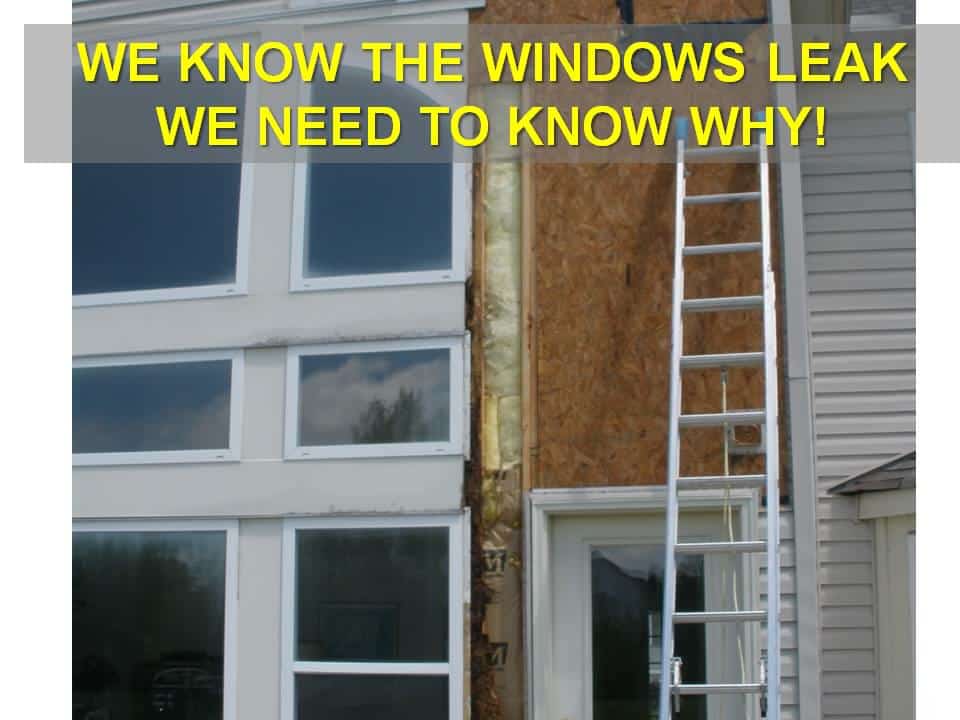
From the pictures, you can see how the absence of proper window flashing and house wrap has allowed the water to penetrate and rot out the wood around the windows, causing significant drywall and insulation damage. More alarming is the mold growth on the wood framing and drywall around the windows inside the home. Aside from the annoyance of water coming in the home during a rain storm, mold growth presents an unacceptable health concern to the family living inside.
If You Suspect a Window Leak
Here are several things you can do to assist your home repair professional with diagnosing and resolving the window leak. During the next rain event, ask yourself the following questions and note your observations:
- Does the window always leak when it rains? Or does it only leak during a heavy rain shower?
- Does the window leak when the rain is being driven by wind from a particular direction?
- How long has the window been leaking? Can you identify any event associated with the first time you noticed the window leak? (i.e. significant storm, ice event, extreme winds, etc.)
- Has the window leak worsened? Or has it remained consistent over time?
- Have you attempted to stop the leak? If so, what has been done? Has that helped?
- If you can obtain this information, find out who built your home and when it was constructed.
Bigger Problem Than Just a Window Leak
Another common cause of a window leak that many homeowners overlook is a bad box gutter. If you’ve ever had box gutter issues in the past and suffer from unexplained window leaks, your box gutter may be to blame.
Find out more here!
Contact Us for Help With Your Window Leak
Call 513-322-2914
Text 513-322-2914 or
Click here to Schedule Online

We get calls frequently where the gutters were partially the cause for basement water damage.
Most problems with leaks are related to missing or improper flashing. Window Signs Decals Wholesale
Very interesting article.
Thanks very much for this well written post.
I wish we lived in your service area… unfortunately, we're in the Philadelphia area. This is exactly what is happening with our windows at the front and back of our house. We had someone out a few years ago, and they simply caulked around the bottom floor window (2 hours of labor costs for 2 people and a $7 tube of caulk). Needless to say, the problem was not solved. Not being very handy ourselves, we struggled trying to figure out what the problem was, and were afraid to pay so much again to have the problem remain unfixed. Now that I have this information, I can discuss our leaking windows with more knowledge.
A question, though… with the years of damage that we have, would you recommend contacting a local handyman, or is this a bigger siding/window company job? Is this something that a remodel company might handle? We are considering an addition on the back of the house, and I wonder if it might make sense to go with the remodel company we are considering for the addition.
Thank you for your assistance. Your blog is wonderful!
Laura-
I'm sorry this has happened to you but the story is all too common. I'd recommend that the company you are looking at to do the addition also perform the repair. More than likely there will be significant wood rot repair and the need to re-flash and seal the windows. Not all handyman or home repair companies are skilled and equipped as we are to do these sorts of jobs, so I would think the GC you hire to do the addition might be the best bet. Although this article doesn't apply specifically to your area, the principles remain the same–I'd suggest you run this on any contractor before you hire them. It can be found here: https://www.mastermylist.com/consumer-education/three-golden-rules-for-better-home-improvement/
Good luck and let me know how it turns out for you!
Don
Got water damage calls this week after the heavy rain. 1 of them may have had to do with gutter issues. As stated above "unattended to gutter's" can cause major issues.
This is a very nice article guys – well written and great illustrations. I own a water damage company and we get a lot of calls in the Winter for water damage from bad window seals. i recomend having them checked before the rains start.
We have the same problem in Lexington Kentucky. However, it appears someone or a combination of someones were asleep at the wheel when building these houses. We have a situation where the builder did not install any flashings on any of our 24 windows; the building inspector did not check to ensure windows were flashed; the previous homeowner did not disclose window leakage problems to us when we bought the house; the house inspector overlooked the water leakage signs prior to loan closing; and now we are stuck with a $10,000 repair bill that includes replacement of rotten plywood underneath the brick and major brick removal to properly install window flashings and replace the rotten plywood. Who is responsible and why aren't consumers protected from major expenses such as these due to other folks fraud and negligence?
How old was your home when you discovered that the flashing was missing?
The house was built in 2000. We bought it from the original owner in Sept. 2004. We just found out yesterday the flashing was missing. We have paid $$$$ to several folks to fix numerous leaks that first appear as water stains on the ceiling over the windows or in sophets above the windows. We've had water drain from the window and run into our basement ceiling panels. That took us several months to figure out where the water was coming from. One window was removed and a sealer was put around the frame, but the water eventually came back. There's a little roof over two of the windows that was removed and re-flashed, but since it had nothing to do with the little roof overhang, the leak came back. I guess all the duct tape or caulking they used when building this house in lieu of flashing finally gave way this year, and now all the windows that are on a brick wall outside are leaking. These window leaks have been loccurring over the years like a bag of popcorn slowly popping since 2004 and finally, in 2004 the whole bag has popped! 🙂
Didn't purchase the house until 2004. Just discovered there's no flashing above windows, no weep holes in brick, and extremely poreous brick this week. Previous owners purchased from the builder. The builder went out of business in late 2000, right after the house was finished.
I just moved into the house built by my grandfather in 1952 in central Texas. I had the interior reprinted in August, 2010. Now I see peeling paint on top of kitchen sink wood window frame, and on bathroom window frame and sill, and various other windows. Water also condenses heavily throughout house on all windows. I’m not sure where to start in identifying cause or solution, and would appreciate any suggestions. Can anyone help?
When I lived down in Oklahoma I had a similar problem… it could be a result of window condensation. You can either reduce the humidity level in the home, or replace the window.
If the paint is peeling, there is likely a moisture problem. Before replacing the the window, I would recommend you have the roof and siding (or brick, if that is what you have there) inspected to see if there are any obvious signs of water intrusion above those windows. Leaks like this can be tough to find… so be patient… you may have the endure a “process of elimination.” Good Luck! – Don
Great, informative article. I purchased a home 5 months ago and have since discovered that all the replacement vinyl windows leak to some degree or another. I've since learned the condition was pre-existing as the seller told me she had patched some drywall b/c "water came in". I've contracted with a window company to replace all the windows with “new-construction”; style windows (windows with a nail fin), where they’ll install the new windows by taking down the siding, putting in the new window and flash around it, and then re-install the siding. This way we can see if there’s any damage to the wood under the siding.
My question is, should I be concerned with mold behind the drywall. There is no visible evidence of mold on the drywall from inside the house so hopefully we’ll get a better idea of a possible mold problem once the window guys start their installation. However, should I test for hidden mold in the wall cavity prior to the window install? Or should the window installers be able to remediate for mold once (if) they see it?
Any guidance would be appreciated. TIA
Yeon-
This reminds me of a massive job we just completed where many of the windows in the home were installed incorrectly–which allowed water to get in and cause mold growth and wood rot. In most cases the mold was minor–so we could simply cut out and throw away the damaged materials. Mold remediation laws vary from state to state–typically governed by the amount or type of mold encountered.
I wouldn’t worry too much about this–typically mold tends to be worse on the inside than the outside… so if you don’t have mold growth on the visible side of the drywall… this is a good sign. Yes, you are going to have to “wait and see” when your windows are removed the survey the extent of damage. Let me know how this turns out for you!
Don
How can I tell if the wall damage I see in my house is caused by leaking windows or termites? I believe the windows have been leaking for some time and that has caused the rather large damaged section of wood directly beneath the window but another member of my family is suggesting it is termite damage. is there any good way to tell the difference yourself before calling in professionals?
Rudy-
Water intrusion and insect damage go hand in hand. Usually, the moisture and rotting wood will attract bugs, as this becomes an easy meal for them. Do you see any “sawdust-like” remnants from the termites? Have you had termites in your home, or area before? Have you had an pest control specialist out to look at it yet?
Don
We’ve run into an issue with a leak above one of our windows. The leak only happens when it’s raining and wind blows from the south, about 5 times a year. We had someone come out to look at it and after reflashing it they left but the leak still happened. A few days of spraying a hose at the side of the house let us pin-point the leak as happening along the edges of the two windows the floor above and the water came out at the top of the window a floor below (after spraying water for 20 minutes). All of the windows have chunks cut out from the vinyl siding at the bottoms that we think is letting the water get through.
Now we’re noticing some cracking around the sides of all of the windows, which is worse than our neighbors (all built in 2001), so we’re starting to think that we might need to replace them all. We live in Utah, very hot and dry. So here are our questions. How can we tell if the windows are installed incorrectly or if they just need repair? The windows look good from inside and outside. Also, is this something a handyman can take care of or should we go with a window company or general contractor for fixing all the problem?
Chris-
I’m sorry to hear about the problem you are having with your windows. However, it isn’t unusual. We see this every day out here in Ohio.
Here is what I would do if I were you. Hire someone to take one window out and replace it to analyze how the windows were installed. This will tell you if the flashing and/or installation method was defective and whether or not it can be remedied without replacing all the windows.
A general home repair/handyman company might be your best bet to solve this. Here’s why:
1. They get most of their business from fixing other people’s mistakes, so the technicians tend to be better at problem solving than the construction worker/installer types.
2. A window company rarely will do this sort of diagnostic work or single window replacement. Their incentive is to sell you all new windows… so guess what their recommendation will likely be?
3. General contractors almost never touch these small jobs… and when they do, they are rarely good at them.
4. If you decide that windows should be replaced, that home repair company will be happy to source them from a variety of manufacturers (i.e. they aren’t tied to the brand they manufacture or are a dealer for) that will best work with the condition you have in the home.
Make sure to use my checklist, Three Golden Rules for Better Home Improvement to help you select a home repair company you can trust in your area. Keep in mind you should pay for the diagnostic time to disassemble/inspect the window opening, wrap, flashing, etc. on the house to figure out what is going on with these windows. The ‘free estimate’ in this sort of situation is merely a ploy to sell you a project that you may or may not need… so avoid that.
If I were in your area I’d be happy to help… but it might be a few years before ProMaster has an office out in Utah!
Please let me know how this works out for you!
Good luck!
Don
Great article. I didn’t realize how big of a problem improperly installed windows are for leaks. It’s unfortunate that it isn’t just a matter of sealing the exterior with caulking.
We have an issue with window leaks. First our home was built in 2007 and finished in 2008. Within the first few months of moving in we experienced mold all around the window jambs. We have hired an engineer and figured that we have a multiple problems. We have had 4 sets of windows in our home. Mostly due to installation problems. We believe it all relates to improper installation even starting with the first windows. Now the final set we have is doing better but we have a replacement window in a energy start tight home. We have blue foam boards and then house wrap on the outside with a brick veneer. NO FLASHING at the beginning or now. They don’t want to install flashing….because we are at the replacement window stage and they don’t want to remove the brick. So they are wanting to seal our brick because of humidity and water going through the brick causing us window leaks. Did I mention no flashing…and guess what that house wrap is even wrapped into the window frame on the top of the window. They took off the jambs and cut into the dry wall into the worse window in the garage. And the window frame is setting in that area of the brick veneer partly and water is coming down that house wrap onto the frame and going where it wants. Will sealing the brick really solve anything?? Or is it a temporary issue. And our bricks have no weeps. We are in a big mess. Thanks!
Tammy-
Yes, you do have a big mess.
Where to begin?
Keep in mind that brick veneer (sealed or not) is not intended to stop moisture. Hence why house wrap is required over the sheathing in conjunction with flashing to properly shed any water that penetrates the porosity of the brick and mortar. That flashing, as you correctly indicated, should be directed toward weep holes at the top and bottom of windows, as well as out the bottom course of bricks. Without this system of flashing and weep holes in place, you run the risk of trapping moisture in places where there is organic material for mold to feed upon. Sealing the brick might prevent much of the moisture in the first place… but it also might prevent any from getting out, as well.
Not that I am against sealing the brick. We’ve done it many times for clients with pesky water intrusion problems. My concern in your case, however, is that we aren’t addressing the fundamental construction defect causing the problem.
So my advice to you is to tear the brick out and properly flash each window… and have the weep holes installed.
While this is invasive, it isn’t impossible. There was a major class-action lawsuit in my area a few years back where a builder’s subcontractor failed to flash windows properly–which led to a rash of mold problems like you have. The builder was forced to tear off entire sides of home and re-brick them. Homes aren’t like people… anything can be redone or repaired. The question is simply one of cost.
Redoing all your brick is probably outside the realm of possibility unless you sue the builder or he agrees to do it. A more realistic compromise might be to hire an extremely skilled mason to rework a few courses of the brick in the problem areas around the windows… then re-flash them appropriately and install weep holes. This is precisely what I did on my home. It was built in 2006–and just like you, had some brick veneer issues that did not conform to code. We tore out most of the brick window sills in the home and re-worked them. Sure, they look slightly different than the rest of the house after tearing them out and replacing them… but at least they shed water correctly!
Only after addressing the obvious water shedding issues would I seal the brick. Make sure you use the correct sealant for the type of brick you have and simply accept the fact you will have to repeat that sealant application every so often. (That interval could greatly depend on many factors… but in my experience I wouldn’t plan to exceed 10 years.)
Then, I’d suggest you see if you can get a skilled home repair professional to install the new windows for you–not one of the window company’s run-of-the-mill subcontractors. In other words, find a company like ours in your area where they have craftsmen who deal with mitigating the affects of these sorts of construction defects. These craftsmen are going to have better ideas as to how the windows can be installed to mitigate your situation while satisfying the manufacturer’s installation specifications. In addition, ask these craftsmen about using as many synthetic products as possible. We’ve had great success in repairing all sorts of window sill and frame rot with PVC and some of the newer synthetic products–so if you currently have wood brick moulding or trim–I’d highly suggest you opt for these newer, non-organic materials when those windows are reinstalled.
If you want to call me directly to discuss, our number is 513-724-0539.
Thank you for your question… I’m very sorry this has happened to you. I wish you and your home well!
Don
I pulled up the carpet in our upstairs bedroom closet and noticed water stain & dampness to the plywood subfloor. The tack strip for the carpet was completely black in color. The nails were rusted. The dampness of the wood is the perimeter of the closet only. There are some little spot along the adjacent wall but the majority come from the closet. There is a window on the opposite wall of this closet. The exterior of the house is stucco. I caulked with polyerathane(spell??) sealant under 2 other windows on the opposite of this bedroom. Under the window the stucco seems to separate resulting in a cracked line. A roofer mentioned this to me and that why I sealed it. A huge storm came through over the weekend and the dampness of the plywood in the said bedroom reappeared. It appears most of you questions have to do with windows with wood exteriors. Since my house is stucco and I didn’t see any pull away from anywhere else along this window that I caulked. My question…it it possible my caulking only to the crack below the window is enough even though I didn’t see any other cracks along the windows? There is no water stains on the ceiling only the plywood under the 2×4’s. I’ve been struggling trying to find where this is coming from. I can’t seem to even find which direction it’s coming from to the closet. I even pulled the sheetrock out of closet, but nothing trickling down the vertical posts either. Can you help me please? Thank you.
Linda-
I am so sorry to hear about your leak. Water leaks like this can be pesky to troubleshoot because there can be so many causes. Your stucco exterior may or may not be the cause of the problem.
Since you mentioned stucco, however, there are several problems that can occur based on the type of stucco you have and region of the country you live in.
In Cincinnati, Ohio, we see a lot of a product called Dryvit. It is a stucco-like product that also serves as an insulation. In some cases, however, when improperly installed, can lead to moisture problems because unlike other forms of veneer (like siding or brick) it doesn’t use a vapor barrier to prevent water intrusion to the wall sheathing. Small leaks can result in larger-than-normal water damage because Dryvit (being a great insulator) doesn’t let any of the water out like other forms of home siding.
It may well be that a crack in your stucco exterior is allowing driven rain, or runoff to get inside the wall. Without any vapor barrier, water will eventually find a crack in the sheathing (or make one in time by rotting away the wood) and cause interior water damage like you’ve experienced.
Instead of guessing at the problem, I would suggest three options for you to get to the bottom of the problem.
Option 1: Find a professional home repair company in your area similar to ProMaster. Look for craftsmen that are asked to troubleshoot these sorts of problems on a routine basis. We often troubleshoot these leaks by duplicating them. That’s right, we get out the hose and start hitting spots on the house that are suspect and observe the result. Often times we also use a small bore scope camera to insert into the wall in places we can’t see. This isn’t quite “scientific” but it is inexpensive, non-invasive and usually pinpoints the problem so that we can zero in on what needs to be fixed.
Option 2: Tear it all off and rebuild it. This approach is what most contractors will advise. They do so not because they just want to make a lot of money off of you. Rather, if they have any experience with these problems at all, they know leaks like this are tough to solve… and the only sure-fire way to get them is to reconstruct the offending area of the building. They have been burned in the past with attempts to save the client money by doing the least expensive, most obvious repair first. And when that doesn’t completely work, the client gets angry and demands the contractor continue to perform additional repairs for free until the leak goes away. So keep in mind repair contractors are in a “no-win” situation here. But, some of our clients do opt for the “replace everything” approach… as they demand that the problem go away on the first try.
Option 3: Infrared Scanning. I read an article advocating the use of infrared cameras to diagnose problems like this. Unfortunately the equipment is expensive and requires some specialized training… and I haven’t been able to gain first-hand experience with it myself. One of my best friends is a home inspector here in Cincinnati and is certified to use his Infrared camera. You might want to call around to some home inspectors in your area to see if for a few hundred bucks they might be willing to come out and check out your home, take a few scans and see if they can pinpoint the pathway of the leak. Then you could hire a home repair contractor to perform the home inspector’s recommended actions.
I hope my thoughts are somewhat helpful. Please keep us updated—we’d like to know how your problem got solved!
Happy Remodeling!
Don
I have a window that only leaks in one corner when the rain is blown a certain direction. It has caused the drywall to fall off. How do I fix this?
Erin-
It is critical to fix the leak first. Is the leak at the top or bottom corner of the window?
Don
This is a really awesome website/forum you guys have to help people all across the country. So this is my problem. This leaky window is new, so I had the installers come out to have a look. Right above the window, no more than an inch, is a huge decorative board parallel with the top of the window. The board is just screwed into the vinyl siding, it is not built in. The window installers say that the leak is coming from the 4 screws holding the board up. My question is, why did it not leak before with the old window? My window is wrapped all around with this aluminum sheet metal, so I can’t see anything obviously wrong. All the chalking looks good. Is it possible that something was not done right behind the wrap? Is the wrap suppose to keep water out from getting behind it? Is it possible the wrap was done incorrectly? The leak is coming from the top of the window. It doesn’t leak every time it rains. Sometimes, it could be hard rain and there is no leak and other times, it could be light but windy rain and then it leaks. There is wrap in that inch space between the window and the decorative board. If I spray water at that, it doesn’t leak. But when I spray water above the decoration and let the water drip down, after 10 mins, water is everywhere in the house. What are your thoughts? Thanks for your time.
Mike-
Every day we see a problem like the one you are having. There are so many errors made with window installations that cause leaks it would blow your mind. I believe you are on the right track… there is clearly a problem with how the house wrap interfaces with the window flashing. Your best bet is to have someone who knows what they are doing remove the window, correctly tie the wrap into the flashing, reinstall the window correctly and caulk it properly. Often times trying to fight a leak this bad with a series of band-aids ends up costing more money.
Don
First,I would like to thank you for posting the video on leaking windows. It has informed me a lot and made me somewhat knowledgable and how to proceed with my own leaking window problem. In my case water is also coming into the garage below the window area, Not sure if its also a flashing problem where roof meets wall? Any thoughts?
Stephanie-
It sounds like it could be a flashing problem. Before removing the window, see if you can have the flashing on the exterior of the window inspected. If the area is not easily disassembled (as is the case with brick or stucco) then have a home inspector with a thermal imaging camera take some shots of the location while it is leaking… this will tell you where the problem may be so that a repair technician can direct his attention towards the best solution.
Good luck!
Don
I am at my wit’s end with a window leak in my home! We moved in nearly 5 yrs ago and for about 3 1/2 yrs, anytime there is a hard wind driven rain from the east (which has probably happened about a dozen times over the years) my front window leaks from the top of the frame. It is set in a brick veneer siding. It has been caulked so many times, that cannot be the problem. We see no signs of damage on the drywall above the window. Is replacing the window my only option, and is it possible that even then the problem will continue? I have a hard time even getting people out here to look at it. Am I calling the wrong type of contractor/handyman? Any info will be greatly appreciated.
Amanda,
I am so sorry to hear that you’re suffering from this sort of window leak. Brick veneer and window installation errors and defects are unfortunately common. It sounds like the window was improperly flashed and/or the brick flashing and weep holes around that window are either missing or improperly installed. Your only option at this point is to take the window out, and probably a few courses of bricks as well and then reinstall them correctly. Believe it or not, I had to do this on several windows of my brand new house about 6 years ago because I wanted to avoid the exact problem you are having. I just discovered a brick home being built down the street from me with the same problem… no flashing and weep holes in the brick around windows… so it will have similar water shedding problems as you’ve experienced. As far as finding someone to help you in your area… I would suggest the more reputable (and yes, expensive) handyman/home repair companies … but when you call them ask them not “if” they will fix this… but “how many times in the past year” they have dealt with the exact problem you are facing. Some companies like ours deal a lot in this area of troubleshooting/repair because it is a common problem in Cincinnati while others focus mostly on just replacement. The same is probably true in your area… it will just take some time to find someone who is well versed in these problems, but will be worth it. Best of luck and let me know how this turns out for you!
Don
I live in Toronto, Canada and last week water was pouring into my finished basement from the basement window well. The water didn’t pool though but there are leaves in it and the gravel isn’t as high as the concrete ledge and there is no cover on it. I spoke to a basement sealer guy and he said that it was probably the drain in the window well. My son thinks it’s a crack in the foundation and wants to dig it all up and waterproof it. What do you think?
Susan-
It could be either problem. I’d start by installing a drain in the well and making sure it connects to the drain tile or is carried away from the foundation. If that doesn’t work, then you can invest all the money to excavate the side of the foundation and seal it.
Good luck!
Don
I’m in the process of having my wood siding redone, and there was a bit of wood rot ( trim and siding )found at the lower corners ( only )of two windows, not too bad though. The windows( vinyl replacements done about 13 years ago) were not flashed. The people doing the siding say that just flashing the window properly should take care of this problem for the future. I was reading somewhere that all vinyl windows will eventually leak. Does the recommendation of just flashing the existing windows make sense, or could it be defective windows. Thanks!
Jerry-
Great question. I suppose it is a true statement that all windows will leak eventually. In 50 years? In 200 years? In 5,000 years? I suppose what it comes down to is what a reasonable expectation is regarding the lifespan of a window.
The cause of window leaks is most often related to improper window installation, not necessarily failure of the window itself. So yes, flashing the windows properly will do wonders for resolving leaks and preventing water damage and rot.
If the window itself still looks solid, the glass is still good, and you are happy with its looks and performance, I wouldn’t replace it just because it is 13 years old.
Don
I have a window leak and I cannot figure out where it is coming from. It only occurs with a driving rain full on to the window. The area at the bottom of the window starts overflowing onto the interior window sill and down the wall onto the carpet. The problem has been there since the house was built but does not happen too frequently because we do not get that much rain here in Arizona. There appears to be runnoff slats on the exterior of the window but I cannot tell if it is blocked or not (that was the problem with another window I have). Got any ideas.
Valerie-
Sorry to hear about your window leak. I know this sounds like a strange question… but I have to ask… are you sure the window was installed with the correct orientation? Sometimes we see windows installed upside down or inside out.
Assuming that isn’t the problem, then check to see that no one has caulked over the weep holes at the bottom, exterior of the window. This could block the exit of any water that makes it past the seal and if it has no way to drain out, will back up into the window sill.
After you check those two items, let me know what you see.
Don
One of the window on the front side of the house leaks whenever there is heavy rain. It leaks at the top of inside window. The outside of the house is covered with stone veneer. Couple of handy men applied caulk in the past, but no use so far. The house is in Columbus, Ohio. Who actually fixes this leak? Handyman or Window installer? Are there any best contractors to identify the leak and fix once for all? Thank you.
Venky-
Thanks for the question. It is interesting that you just emailed me from Columbus, Ohio. We are working on a job there now where a gentleman had a similar problem with several of the windows on his home.
He has both stucco and stone veneer around some of these windows and when he experiences driving rain, the windows leak. He has invited several contractors in his area to the home to help solve the problem—to no avail. So he invited us up from Cincinnati to solve the problem.
In most cases windows leak as a result of poor installation. In the case of this gentleman in Columbus, one of the windows was in fact installed upside down! Usually, however, the leaks are a result of poor flashing installation or integration of that flashing within the veneer or siding of the home. Stone and stucco facades tend to be extremely problematic in this part of the country. Why that is… I am not sure. I can only surmise that because these materials are not as common as siding and brick construction that possibly construction workers and remodelers are not familiar with the appropriate procedures and techniques for their installation.
At any rate, to stop your leak my best advice would be to hire an extremely experienced, multi-disciplined craftsman with a lot of home repair experience.
A homeowner might think that a window company would be the best fit to solve a window problem. While that makes sense on the surface, the problem is that these companies tend to avoid repair work (as it isn’t profitable for them) and their installers tend to be trained to do one thing well—and that is to remove and replace windows… quickly and efficiently. Often these companies do not have craftsmen on staff who have built homes—which helps a lot when troubleshooting leaks, as the craftsmen can spot construction defects or deterioration in all the parts of the home that might lead to a leak.
A good craftsman with a handyman or home repair company will know how the framing, flashing, window and façade all work together to shed water. And given that the majority of work he sees is repairing or troubleshooting problems like this, he is more apt to be able to help you find the source of the problem.
One of the questions to ask when you are calling around to these handyman or home repair companies in your area is how many of these sorts of jobs they do in a month. What you want to also learn is do they have (or have access to) any special diagnostic equipment to help them troubleshoot the leak. For example, we at ProMaster occasionally will use scope and infrared cameras to help diagnose or pinpoint the source of a leak.
My best advice to you when troubleshooting and repairing a window leak is to start with the most conservative approach first and then work your way up from there. In other words, take an iterative approach, be patient, and observe the difference each action makes. For example, start with a proper inspection for flashing or installation defects. Then ensure you’ve got a good caulk job on the window perimeter and all weep holes are clear.
If the leak persists, have your home repair professional perform a leak diagnostic. This need not be fancy, as a good old-fashioned garden hose will do the trick. The idea is to simulate different types of rain driving from different directions and volumes. This is where a scope or infrared camera can help in some cases. The hope is to recreate the leak so one can identify the source and repair that without expensive and invasive repairs.
In some cases, however, the windows must be replaced. In your case with a stone veneer this can be extremely expensive because some of the stone itself must be removed if one wishes to properly flash the new window upon installation. We’re dealing with this problem with the gentleman I mentioned in Columbus. Some of his windows were never installed or flashed properly and installing new windows won’t solve his problem. So we have to tear out some of the surrounding stucco and rebuild the system correctly. This is obviously more expensive and invasive, but the only way to solve the leak.
I hope these thoughts were helpful to you. Good luck with finding and solving the leak!
Take care
Thanks for this webpage, very informative photos and video!
The photos helped me diagnose my window, that it was in fact leaking. I thought it might be the gutters above the window, but there was no ceiling water damage or water damage above the window.
Glad to hear we could help!
– Don
I spent over 215k for my home built in 2000. hired an inspector and obviously paid him. windows south side of home leaks and needless to say i am upset about the situation. I think the previous owners were dishonest and our inspector did a not so good of a job. Thanks for the ideas and i wished you were located in MO, which is where i live.
Osman-
What have you done thus far to attempt to fix the problem?
Don
Thanks for the info…could use you guys in Virginia. I’m an Angie’s List member but I’m not sure what to search for. If I were to search for you guys, would you be under “handyman” or something else? I want to make sure I get the right people and not just a handyman that does odd jobs if you know what I mean.
Dan-
Great question. I think the term ‘handyman’ plus your geographic area would certainly work to get started in finding a home repair professional. You could also try searching for the specific service you need, like “wood rot repair cincinnati ohio” for example. In any event, Angie’s List is a good place to check out a potential service provider, but don’t forget to use great sites like GuildQuality.com and bbb.org. Both Guild Quality and the Better Business Bureau have search engines on them now as well where you can search for a reputable contractor that does what you need in your area.
Take care!
Don
Thanks for the quick reply. I was able to find what appears to be a reputable handyman (they’re a franchise). I was told that they would do a leak test by hosing down the window. Just out of curiosity since your video above doesn’t mention it, how does one go about doing a leak test? I’m asking because I found this website from a fellow in Chicago who specializes in windows and he has what looks like some kind of contraption and talks about window water testing standards. He’s probably geared more towards office buildings than residential, but I want to make sure the leak test is done right by whoever I contract with. Thanks in advance.
Hi! Great website!
We hail from Alberta, Canada, and have experienced leaking from our windows after a driving rain from the west, and we live facing a lake so… We had wet carpeting once before in front of the windows under similar weather conditions but we thought it was caused by an outdoor electrical plug that hadn’t been caulked. Obviously that wasn’t the problem! As our house is only three years old, the builder came in to look and do what he could on the same day. It appears that the vinyl has shrunk on top of the windows wherever there are mullions, leaving large gaps and allowing moisture to enter, travel behind the wall and then gets absorbed by the carpet. The inside of our window bench was also a little damp. The builder also pulled off the bottom interior window frame and wood behind was also wet. He called the window peole and they are coming to look today ( a week later). New vinyl has already been ordered.
I am wondering now though if repairing it enough? Should the carpet be pulled up? Should the window box be replaced? Should anything else be investigated? My husband has now noticed gaps all around the house. We don’t if or how long water has been seeping in. It’s only because of the driving rain that we discovered it. It took us all week to dry out the carpet sopping it up with towels initially and running our ceiling fan on high. I guess we should’ve been doing a lot more.
Frustrated and nervous in Alberta!
Darcy
Darcy-
Sorry to hear about the gaps in your home. I’m assuming that you have vinyl siding all around these areas of concern, correct? If the windows were properly flashed in conjunction with the installation of house wrap (which acts as a vapor barrier) the small gaps in siding are of huge concern.
Are you able to see house wrap behind the siding?
Don
Hi Don,
This website was so helpful and well done. Thanks for the information. I have a question for you. My husband and I have been looking for houses for months now. We are on the cautious side and have rejected multiple homes because of cost, water problems, poor craftsmanship, etc. We found a house that we like but noticed on the second visit back that the paint is cracking and peeling badly near the window. It’s unclear what exactly the extent of the damage is; however, it’s clear that the window leak is the source. What is your advice? Should we not even consider putting an offer on a house with window leaking causing water infiltration? Or is this a semi-typical issue that can be resolved?
Thanks,
Theresa
Theresa-
Great question! Keep in mind no home is perfect… new or old. As with any defect you spot in a potential home, talk with your realtor about putting in a contingency for those items in the contract. Then hire a professional, qualified home inspector to take a look at those items and provide repair recommendations. Give those repair recommendations to your home repair professional to provide repair cost estimates and either negotiate the sale price accordingly or give the seller the opportunity to fix them.
Alternatively, if the seller is open to having your repair professional drill some small holes in the wall, they can insert a scope camera behind the wall near the window to see how bad it is a leaking and attempt to determine the cause. If the windows are old, it might be worth simply replacing them, so that they can be re-flashed and sealed properly.
Good luck and thanks for the question!
Don
Hi Don,
I am from Michigan and we are having what we think might be a window leak, but we aren’t sure. Whenever we have hard, driving rains, we get small drips the come from what looks like above the glass block basement windows. When we originally noticed the problem, we had really old windows and so we had the windows replaced with glass block windows in May. However, we still have the problem during hard, windy rains. And it happens above all 3 basement windows. Our house is painted brick and was built in the 60’s. After replacing the windows didn’t work, we went around the house and filled in any voids that we saw that could potentially allow water to come in. However, that has not fixed the problem either. My concern now is that when we did have the windows replaced and we explained to the men what was going on, they suggested we spray foam insulation in the space between the top of the window and a wood “joint” (for lack of a better term) to prevent air and moisture. However, we are still getting the drips. My concern is the potential (if any, I’m not sure) of mold/rotting going on in the area above where we put the foam. Obviously water is still getting through, so maybe the water isn’t drying out fast enough and is causing damage? I know that we need to fix this issue, I’m just at a loss as to how. We have had several people come and take a look and nothing has worked so far. Anything you can suggest would be great.
Thanks,
Julie
Julie-
I sent you an email for you to reply with some pictures of the windows. I can’t quite picture you setup from the description, so if you can snap some pictures from each side that would help me direct you down the right path to resolving your leak.
Thanks!
Don
I live in a condo development that have decided to do a completely new envelope on our buildings after finding signs of rot in some areas. A few years ago many of the owners including myself have installed new replacement windows for the purpose of better installation,
Is it possible to have those windows corrected with proper flashings etc.? As of now we are being told we have to buy brand new construction windows. Would appreciate your I put Don.
Thanks,
Flo
Flo-
You do not need to buy new windows to repair the flashing.
Don
Thanks for this article and being so diligent in responding to the questions. I live in southwest Louisiana. We built our home in 2008. Not too long after moving in, we started having one west-facing window leak during heavy, driving rain storms that blew from the west. We had the builder out a number of times. They identified a spot where a nail had penetrated the flashing when the stucco had been applied. That was repaired; however, it didn’t fix the leak. Again the builder was contacted. They installed a new piece of flashing in the roof joint near the window. This did not fix the leak. Once more the contractor came out, but they were not able to find the cause. After the last time they came to inspect the problem, they would no longer return my calls, so next I contacted a local handyman who found an area where the gutters were attached had caused a hole which they sealed. This only helped for a roughly a month and had to be repeated. It seemed to fix the problem. Seemed being the operative word. Unfortunately, the leak continues. I’m at my wit’s end and fear a very expensive repair. I don’t even know who to call at this point as no one seems to be able to figure out what is causing the leak. During rain events, no wet spots have been observed in the attic or on the wall. It’s only above the one window. Any help, insight, direction, or advice you can provide would be greatly appreciated.
Thank you, Lisa
Lisa-
I’m very sorry to hear about this persistent leak you are experiencing. Sometimes leaks like this can be really hard to find. It sounds like your builder has given up and doesn’t want to be bothered with it. In which case it looks like you will have to find someone else to help you.
Here is an idea to try… that we do sometimes with a really hard to solve leak. While this costs a little money, it beats tearing a whole section of a house apart and rebuilding it just to solve a small leak. Call around to various home inspectors in your area and ask them if they own and are qualified to use a thermal imaging camera. The thermal camera helps detect the pathway of water intrusion because it will visually show the temperature difference of the water relative to the surrounding house structure. The way you apply the camera is to simulate a rain storm to reproduce the leak by spraying the area with a hose… and then watch the behavior of the area on the camera. It isn’t a 100% guarantee that you will always find the leak this way, but it will often help narrow down the area where the water is getting in.
Good luck and let me know how this turns out for you!
Don
Hi. We just moved into our home in NY a few months ago. We have had several strong rains, some wind driven ones. Water seems to be leaking from the top of two windows. One window is directly above the other on the next level of the house. The windows are vinyl replacement ones and we have vinyl siding . Rain water will drip down the inside of windows and pool on the sill. We had a roofer/siding company look at it. They suggested either removing the siding and capping and installing new aluminum capping or attempting to just caulk and see if that helps. Wondering what your opinion would be.
Elana-
Thanks for the question. I try to approach window leaks using the least invasive treatment first if at all possible. In this case, if there are no other obvious defects with the window and siding, then start with a proper exterior caulk job. This entails removing all the old caulk, cleaning and prepping the surface and then recaulking the window with an appropriate exterior caulk suited for these windows. While I don’t typically endorse a particular product or brand, our guys have had great luck using an exterior window caulk made by OSI called QUAD MAX. You can usually get it at most home improvement stores like Lowe’s and Home Depot.
Now, if the leak persists, then it will be time to remove the siding around the windows and see how the house was wrapped and flashed around that windows. Of course, this is far more costly than just recaulking the window, but less expensive than replacing the window altogether.
Please let me know how this turns out for you!
Take care,
Don
My two downstairs Windows only leak when a bad storm blowing straight at them comes, which is rare. They leak at the top not bottom. I tried caulk, but still happening. Can the window be flashed if it has brick around it? I don’t really want to take all the buck off.
Angela,
I am going to have to assume a few things here in order to answer your question. If any of these assumptions are not the case, they might lead you toward things to check first.
First, I am going to assume that windows have not always leaked since they were installed. If they leaked since they were installed we could immediately look at how the flashing ties into your brick veneer, which could cause this problem.
Second, I am going to assume that there are weep holes properly flashed and installed on the course of bricks either 2 or 3 rows above the window. This would allow any driven rain that gets behind the veneer to exit the facade before hitting the window.
Third, I am going to assume that the windows themselves aren’t bowing, thus allowing a gap in the seal between the frame and the buck.
Fourth, I am going to assume the windows were not installed upside down. Believe it or not, we see this all the time. One of the problems with installing windows upside down is that the weep holes are at the top, not at the bottom, and a wind-driven rain will enter the weep hole at the top and drip down to the bottom of the window, then have nowhere to exit.
If all of my assumptions are correct, I’d recommend you attempt to replicate the leak with a hose. Spray water at the window in different places, starting at the top, giving it a bit to soak in, and see if you can figure out where it is coming in.
When you have brick veneer, it can be almost impossible to fix a flashing issue without removing the window or, in some cases, a course or two of brick. One thing we’ve had success with in certain cases is coating the area of affected brick with a clear water repellant. While this isn’t necessarily how the best solution (as it can trap water inside the veneer without proper weeps installed) it is sometimes the only solution without being too invasive with the repair.
Let me know how this works out for you!
Don
Hi, when flashing is improperly installed causing a window leak, is it a roofing problem for the roofers to fix or is it a siding problem for the siding guys to fix, each one is pointing the finger at the other.
Jean-
That depends. Where is the flashing in question?
Don
Around how much would it be if the top interior of the window is missing to prevent the moisture coming inside the house?
Hi Laura,
I’m not sure exactly what you are asking. But consider that it is the exterior components of the home (sheathing, house wrap and siding (or other finish veneer) that keep the water out of the home, not any of the interior window components. Can you email us a picture and maybe I can see a little bit more of what is going on?
Thanks!
Don
Hi Don,
Great website. I live in Michigan in a 1950’s brick colonial. Out basement is concrete and I recently had all the old windows replaced with glass block windows. I’ve noticed long cracks along the bottom corner of every glass block window installed and am not sure why this happened. I’m waiting on a response from our GC. Any ideas what caused this and what I can do to fix it? One crack is really bad and needs immediate attention. The others are still small but I want to address them asap.
Thanks,
Mike
Mike-
Do the cracks radiate diagonally out from the concerns of the “frame” where the glass blocks were installed? Or are they more vertical or horizontal in nature? How wide are the cracks? How soon after the blocks were installed did you notice the problem… and what time of year did they develop?
Thanks for the question!
Don
We have a decorative window that only leaks when there is heavy driving rain. The leak happens under the sill. It has been caulked and that didn’t help and it only happens when the rain is blown towards the window. There is a small ledge of roofing directly below the window and I am thinking the issue has something to do with the flashing where that roof ledge is meeting the window. If this is the cse I am guessing I should be able to have a roofer inspect and repair this but not completely sure. The company who originally installed the window didn’t see anything wrong but it had dried out so they couldn’t tell where the water was entering. Do you think I am heading in the right direction? Here is a picture, the window is the arched window on the right on the 2nd floor.
http://photos1.zillowstatic.com/p_f/ISyw10olev34wz.jpg
Julie-
Thanks for the question. Yes, you are heading in the right direction. They key is to isolate the source of the leak, and sometimes that is best by a process of elimination. Even though the water is visible at the sill doesn’t mean that it couldn’t come from above the window… as the sill might just be the first available exit point. There can be many other causes of the leak… check glazing the panes themselves, the weep holes and drains, the flashing of the window to the siding, as well as the flashing of the bottom of that window to the roof line. Let us know how it turns out for you!
Don
OK thanks I think we are heading in the right direction. The wwindo guys did a pretty thorogh job checking everyhing with the window itself and there is no sign of any water damage on the actual window sill or frame.
It looks as though the water is coming in beneath the windows.During the storm on Saturday there was about a 30 min period where the wind was blowing directly at the house and the water was streaming in under the wood frame around the window on the interior of the house and running like a river straight down the wall in a line over what seems to be the drywall seam. When the rain stopped blowing it immediately stopped and the wall has completely dried.
It has happened 3 times in 9 years so I really want to fix it properly so when I repair the wall damage it doesn’t just happen again.
Thank you so much for the information you provide here, it is an amazing help!!
We live in Georgia in a 15 year old house. We have a double window located in the basement that is leaking along the upper part of the window frame along both windows. It seems to occur most when there is a hard driving rain with a lot of wind. At times it has also leaked on the drop ceiling tile above the window. Above these two basement windows is a double door leading out to the upstairs deck. At one time we believe it had a sliding screen door from the appearance of the track around this door. We have had it recaulked and it seemed to help with the ceiling leak but then the water began to come in around the window frame. Could the water be coming in from the doors leading onto the deck and traveling down to the windows below or could the water be coming from where the deck is attached to the house? We were not sure who to contact for this. We had a restoration company look at it and they recommended putting some kind of wrap all around the door frame.
Thanks for your input!
Carol
Carol,
Thanks for your question. There could be a variety of issues causing your problem. In either case, it sounds like there is either some missing or failed flashing that is not keeping the water out. If you can’t find a professional home repair company like ProMaster in your area that is skilled in troubleshooting these sorts of leaks, call some siding companies and see if they have anyone who does repairs. You are likely to find someone who knows how the windows, doors or deck ledger should be flashed properly. Hope this helps!
Don
I live in Columbus, Ohio and have a house I built in 2002 — it is 90% stucco with the windows wrapped in wide cedar trim. We had one massive water leak in a window that is in a two story great room that had a fixed window immediately above it. Took a lot of experimentation, as well as having to rip the sheathing and stucco off and redo it all: what we think the culprit was? On the fixed window the bottom mitre between the sill and the jamb, the factory-install caulk had failed. This area was longer than most due to it being a 2×6 wall.
Thankfully that is the only internal leak I have ever found. But I am now on year 3 of starting to find minor rot in the cedar trim around various windows — usually fixed, but a couple of double hung.
I know for a fact the windows were not flashed (I wish I knew then when I knew now). Windows were installed directly into the openings, and the fins nailed in. Cedar wrap around the windows, and then stucco up to the trim (thankfully the stucco was done with Jumbo Tex wrap and weep screed.
My question is if the cedar trim starting to rot in the corners around the bottom of the windows on some of them is an indication of water leaks from the windows?
I have been debating bitting the bullet and hiring someone good to come and pull every window, install the right flashing and sill pans, and reinstall the windows and trim (maybe use PVC this time).
Do you think this is necessary and the right course, and any sense of how much it might cost on a house with ~20 windows?
We have a recurrent leak from a second-story arched window. The water seeps out of the sill and a lower corner miter joint of the trim. It also seeps out at the carpet level. We have had a roofer inspect the roof. We have had a window company re-caulk. We had a mason tuck and repoint the mortar and caulk some mortar. We had the brick sealed. The problem occurs with driving rain from the direction the window / brick-veneer wall
faces. Could improper (or absent) window flashing explain all this? What about the water seepage at the carpet level?
Chris,
You’ve likely hit the nail on the head. Assuming the caulking, tuck pointing and brick sealing is done well, you are on the right track. There is obviously a problem with the flashing interface between the window, brick and weep holes. One more thing to check… is there anything above this window where water could get in? For example, could there be a leak at the trailing edge of the roof, soffit or facade up high that allows water to come in and travel down the inside of the wall?
Thanks for your question and keep us posted.
Don
My year old window leaked during hurricane Sandy. Two years later I noticed a moldy smell coming from wall so we cut a hole in the dry wall and found mold. We tore out the wall and replaced everything and chalked window. Fast forward to present. A contractor doing other work outside pointed out that he could tell that the wood was rotted under 3 other windows. Since I had called the window installers during the storm and they had just put towels in my Windows and never returned I just ate the first repair. Now the installer came out and said the Windows weren’t flashed and they will fix that but have not answered me about repair to wood rot and possible mold below other windows. Is it okay to fix wall from inside? Do I need to sue to recover expenses? How can I tell if window installers are really fixing windows or just putting band-aid on problem?
Mary Lee,
I’m sorry to hear this has happened to you. I’m going to answer your question with the assumption that you don’t have a home repair professional you completely trust. So here is a suggestion. Hire a home inspector who is versed in window installation and have him come out to inspect the window. He can also serve as an “auditor” as the repairs are going on to ensure they are done properly. I hope this all turns out OK for you!
Don
We live in Dallas, bought this house less than a year ago from the original owner with the house built in 2012. All windows are doing great, except one. We noticed the interior wooden window sill swelling toward both sides, it’s noticeable on the front of the actual sill, looks like the wooden sill is sagging in two places. The swelling seems to be getting worse over time and as we have more rain. We found water sitting in the bottom of the metal sill after opening the window and this was several days after a rain. What do you think is going on?
Julie-
It sounds like the window was flashed incorrectly when installed. Have the window removed, properly flashed, and reinstalled.
Take care!
Don
Hello:
I’m so glad I found this article.
We have a total of 17 windows & 4 of them are starting to leak (2 in master bedroom) & the other 2 are in the basement. We have had a professional come out & caulk them all, but the 4 continue to leak, especially during heavy rain. The rain appears to be in the bottom of the window & sometimes in the “well ” of the window. We have like a marble ledge & sometimes the water will be viable on the this ledge & on the sides of the drywall. The home is brick & was built in 2005. We did notice a crack in the brick by only ONE of the windows. We do have some drywall damage inside. Can you suggest someone in the Louisville, KY area? What can we do? I’m soooo frustrated & paranoid every time it rains. Please help.
Thank you.
Judy-
I’m sorry to hear this is happening to you. The only company in Louisville I referred work to recently went out of business. I’d suggest calling your local BBB and get the name of a reputable home repair company in your area. Best of luck to you and let us know how it turns out.
Don
I had water come into my 1-year old home through the drywall above the window. The builder came out with several of the contractors and found that one of our vents on the outside was not properly sealed. The siding contractor said that water had likely been leaking behind the siding for the entire year and it just finally came to a head after a big rain we had in SC. The builder said the plywood would dry on it’s own and only had the interior drywall covered and painted. My concern is that, if water has been getting behind the siding for a year, the interior of the drywall and the insulation may still be wet as they never checked inside the wall for any damage. My builder refuses to check the interior of the wall and is insistent there is no way that the insulation would be wet. Any advice? Thanks!
Tim-
Sorry to hear this has happened to you. You can easily get a scope camera back into that void to see if there is any wood rot or mold growth without making a huge hole in the drywall. This is what they should have done before repairing the drywall. They also could have tested that window header with a moisture meter was well. At any rate, it might be worth doing that yourself for the peace of mind to make sure there isn’t a problem that will develop later when the builder’s warranty is up.
Don
Thanks!
Hi- we just bought our current house in east central Illinois last year and have had issues with 2 of the windows leaking ever since we moved in. I won’t get into my feelings on the previous owner not being truthful about the problem, so I thought you might have some suggestions.
When it had previously leaked, we had a roofing, siding and window company come take a look. They removed the cedar trim and flashed around both windows. That seemed to do the trick on one window but didn’t fix the other one so we had one of the windows replaced. In doing that, we found that there was no housewrap on that part of the house. Due to some of the water damage around that window and fearing that the entire house may not have been wrapped (and our fears were confirmed – no housewrap), we decided to have the entire house re-sided so all windows could be properly flashed and the entire house could be wrapped.
Well tonight we just had a massive storm roll through and the window we did not have replaced had a good amount of water dripping from the top, and when I say dripping, I mean close to a constant flow. It hadn’t leaked in a long time so I thought it had been fixed, but I was obviously incorrect.
If it’s been properly flashed, could it be due to improper installation, or a defective window? I don’t quite know how to describe where it is leaking other than saying near the middle of the top where the frame of the window meets the inside window trim. It’s not around any of the glass, but near the top middle of the window frame.
I’m just wondering if it could be a defective window or improperly installed since it’s been flashed and wrapped.
On a side note, when he was siding and wrapping the house the guy who replaced our other window said this one was one of the worst installations of a window he’s seen…so maybe I already have the answer but I thought I’d ask.
Thanks!!
Nick-
Sorry to hear about all the problems you have had with the windows.
Try this: look at the window very closely and tell me if you can see the weep holes in the bottom part of the frame of the window. They are designed to let water out should any get into the frame. I know this will sound stupid, but given that they were installed so poorly to begin with, it isn’t unlikely then, that the window was installed upside down. So if you don’t see the holes at the bottom, look at the top. Believe it or not, we see this more often than you would imagine. Having the weep holes on the top (upside down window) can often cause the problem you are describing, even when the window itself is properly flashed.
Let me know what you see!
Thanks,
Don
What is the best way to install new windows into existing opening with no wrap?
Current windows were installed into rough opening with nailing flanges, but no house wrap, or flashing at the window.
6″ Cedar trim wraps the window, and then 2 layers of Grade D paper installed butting up to the trim for stucco.
New windows need to be installed due to failure of the window itself (2nd story picture leaking into 1st story). Old cedar trim will be removed, window taken out. And then you have a rough window opening with a 6″ border around it of OSB, and then stucco.
What is the thoughts on the best way to install the window in that scenario? Do you try and integrate Tyvek wrap over the window opening and get it right with the stucco paper for proper draining plane, and install as normal?
Do you just ignore the house wrap, and put sealing tape on the sides and bottom of the recessed rough opening, then a flexible wrap on the sill, maybe a sill pan, and then install the window?
Everything I can find assumes that you have an easy way to integrate the window into the house wrap for a draining plane, but have not found a good way for this scenario.
Thank you in advance!
Hi. We live in Columbus, OH and have a stucco home built in 2002. We were not the primary owners. We were having the concrete sills replaced around the front of the house because they were cracking. After they were removed, the mason noted wood rot in the corners under all the bottom windows on the front of the house (faces the South). We also noted an upstairs bedroom wood window looks weathered and the trim around the window is warped. There is a small gutter that is flush with the stucco just above the corner of this window and when it rains the stucco below this gutter looks saturated. A neighbor said on their house they found the builder installed the gutters before they stucco’d the house. So we are concerned that may have happened with us as well.
There was damaged drywall under one of the downstairs windows so we removed some of the drywall and insulation in that room and found wet insulation, water damage and rotting OSB.
We have had a few companies out and have had differing opinions on trying to find the source of the leak. I strongly suspect a flashing issue with the windows and the gutter to be the source of the leak. Some want to remove the drywall in all the rooms affected until they no longer find water damage. Other companies want to remove the stucco until they no longer find water damage. After that, they think they should be able to tell the source of the leak. Do you have a recommendation on which way would be best? Since you are in Cincinnati, any companies you would recommend to evaluate our house here in Columbus?
Thanks!
Hi Chris,
Sorry you are having this issue. Interestingly, some folks in your exact situation in Columbus, OH, with stucco homes have had us up there to address this very issue. What I would do if you were here in Cincinnati is this: I’d take a thermal imaging camera and with a hose, simulate driving rain from all directions. I’d then watch, from both inside and outside, the pathway of the water inside the wall. This might help determine which side of the sheathing that the water is coming in on. Of course, it might be coming in multiple ways. Don’t forget to also check to see if the windows were installed upside down. Don’t know why this is… but I have seen that many times with homes in your area… ironically, with stucco facades. If this window is upside down… the weep holes will be on the top, not the bottom… and hence they can’t shed any water that gets into the track.
If your home repair contractor doesn’t have a thermal camera or have access to one, call around to some home inspectors and invite them out to help… many of them have these cameras. It isn’t a sure fire way to diagnose the leak, but it beats tearing off stucco… as that is expensive to replace. If you’re going to tear into anything… do the drywall, since it is inexpensive and easy to fix.
Hope this helps!
Don
Really inspiring.
I had replacement windows installed. The installers used a handheld jigsaw and cut out my old widows, then simply placed the new windows in the hole. Screwed them into place and covered the gap between the vinyl siding and the window frame on the outside with aluminum and caulk. Should I be worried? If so, should I replace these windows with new construction finned windows even though I will have for different windows again? I just don’t want water to leak in now. I haven’t had a leak in 10 years, just needed new windows, thanks.